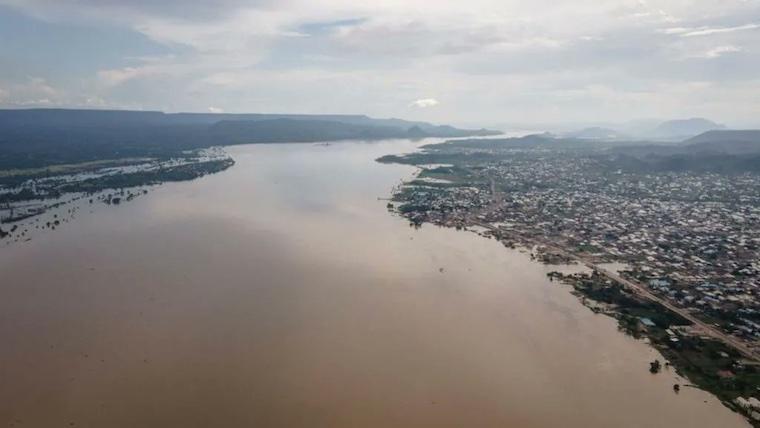
At least 54 bodies have been recovered from River Niger in northern Nigeria after a boat carrying more than 200 passengers capsized on Friday. The boat was en route to a food market, traveling from Kogi State to neighboring Niger State. Only 24 passengers were rescued alive, and officials warn that the chances of finding more survivors are slim.
Ibrahim Audu, spokesperson for the Niger State Emergency Management Agency, confirmed the tragic incident and said the exact cause of the accident remains unclear. However, reports suggest that overcrowding may have played a role. Overloading is a frequent issue in remote parts of Nigeria, where poor road infrastructure forces many to rely on water transport despite safety concerns.
Justin Uwazuruonye, who leads operations for Nigeria's National Emergency Management Agency in the state, noted that rescuers faced challenges locating the site of the capsized boat for hours after the accident occurred. This delay highlights ongoing struggles with disaster response in the region.
The incident adds to a growing list of similar tragedies in Nigeria, Africa’s most populous country, where water transportation remains fraught with risks. Many boats used for transport are locally made and lack proper maintenance, often exceeding passenger limits to maximize profit. Authorities have also struggled to enforce safety regulations, including the use of life jackets, which are often unavailable or too costly for many passengers.
The repeated occurrence of such accidents has raised concerns about the government’s ability to regulate water travel and ensure passenger safety. Despite warnings and past incidents, enforcement of safety measures remains inconsistent. Overcrowding and poorly maintained vessels continue to endanger lives, especially in rural areas where alternatives are limited.
Friday’s tragedy underscores the urgent need for stronger enforcement of safety rules and better oversight of water transport operations. Without these measures, preventable accidents will likely continue, further endangering the lives of those who rely on Nigeria’s waterways.
This latest disaster serves as a grim reminder of the risks faced by travelers in the absence of robust safety standards, with many families now mourning the loss of loved ones.