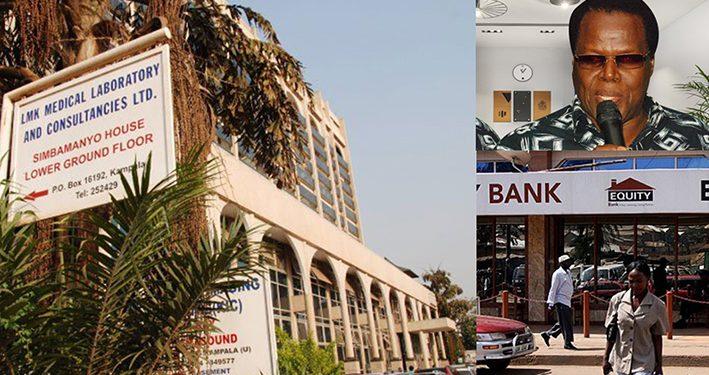
The High Court in Kampala has ruled that the sale of Simbamanyo Estates’ two prime properties was lawful, ending a lengthy legal battle over a $10 million loan dispute involving Equity Bank and the estate of the late Peter Kamya.
In the ruling delivered on July 25, 2025, Justice Harriet Grace Magala upheld the 2020 sale of Simbamanyo House and Afrique Suites Hotel, stating that there was no fraud or illegality in the process. She dismissed all claims raised by Kamya’s estate and affirmed that Equity Bank Uganda, Equity Bank Kenya, and Bank One Limited acted within the law while trying to recover their funds.
The dispute dates back to 2012 when Simbamanyo Estates, then owned by architect Peter Kamya, took out a $6 million syndicated loan from Equity Bank Uganda and Equity Bank Kenya. The loan was used to develop Afrique Suites Hotel in Mutungo and to clear a previous loan from Shelter Afrique. In 2017, the banks issued a $10 million bridge loan backed by a standby letter of credit provided by Equity Bank Kenya and Bank One Limited.
When Kamya defaulted, Equity Bank Kenya activated the standby letter of credit, which led to a post-import finance loan by Equity Bank Uganda. Simbamanyo Estates objected, claiming the loan arrangement was irregular and that Equity Bank Uganda was not the rightful lender. They also argued that the loan breached Uganda’s Financial Institutions Act and lacked a required utilization request.
Justice Magala rejected these arguments, explaining that the utilization request was optional and the syndicated loan helped avoid surpassing Equity Bank Uganda’s lending limits. She added that foreign banks providing such loans do not violate Ugandan banking laws as long as they are not collecting deposits from the public.
The court found no wrongdoing in the sale of Simbamanyo House to Meera Investments for $5 million and Afrique Suites to Luwaluwa Investments for $4.3 million. The judge also clarified that the standby letter of credit functioned independently, requiring payment upon default without needing to notify the borrower.
Simbamanyo’s claims of insufficient notice were dismissed, as the court found that the company had full knowledge of its loan obligations. Previous attempts by Kamya to stop the sales through legal appeals were unsuccessful. In 2021, Justice Susan Abinyo dismissed one such appeal and ordered Simbamanyo to pay Shs1.3 billion in legal costs.
Despite Kamya’s petition to President Museveni in 2021 and a Bank of Uganda review, no wrongdoing was found. The Bank confirmed that Simbamanyo had defaulted as early as 2016, and the sales were conducted within the law.
This judgment highlights the strength of loan contracts and foreclosure processes in Uganda and brings closure to one of the country’s most high-profile financial disputes.